
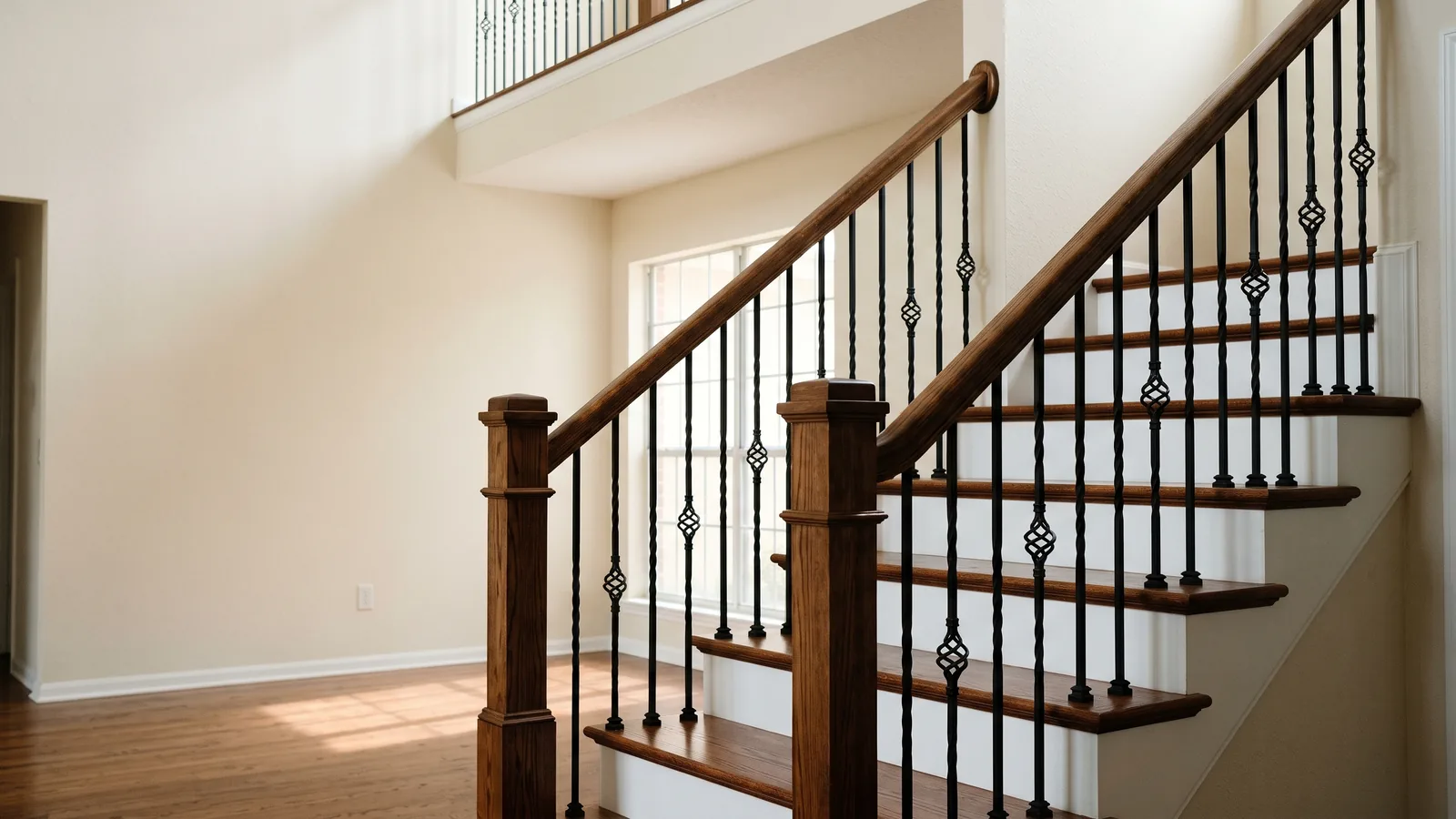
Stair Railing Refinishing Types in Tallahassee
What the refinisher does depends on the material. Wood gets sanded and recoated in place; iron gets stripped of rust and repainted on site, or taken off and powder coated.
Wood Handrail Stain and Paint
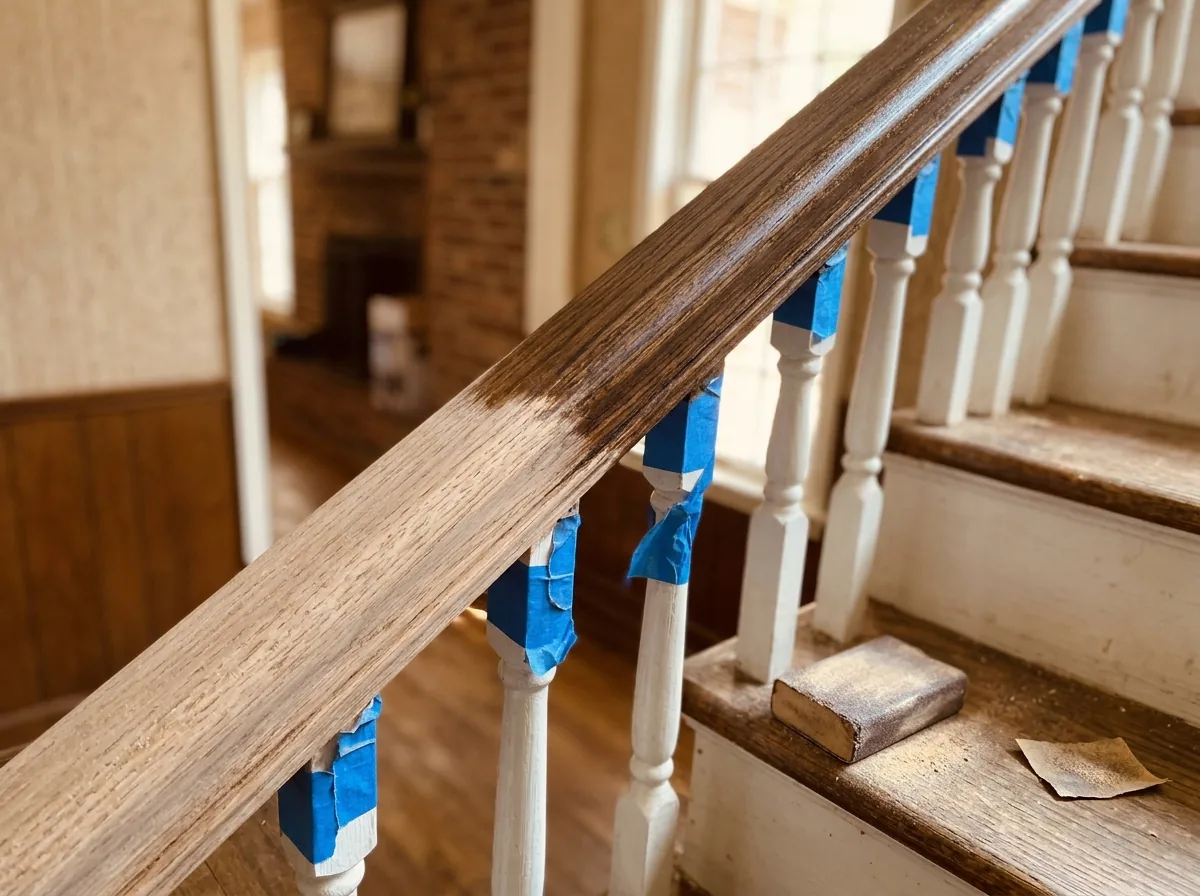
A worn handrail is usually sanded back to bare wood and restained, while the balusters below are cleaned, filled and repainted. The coarse pass takes off the old finish and the fine pass leaves a surface the stain can grip. A chemical stripper is the alternative on turned balusters, where a sander can't reach. Old paint on any of these parts brings in the lead rules further down this page.
- Sandpaper: 80 to 120 grit first, then 150 to 220 grit
- Drying: 4 to 6 hours for each coat of stain and sealer
- Detailed baluster painting: up to $20 per linear foot
Wrought Iron Repainting
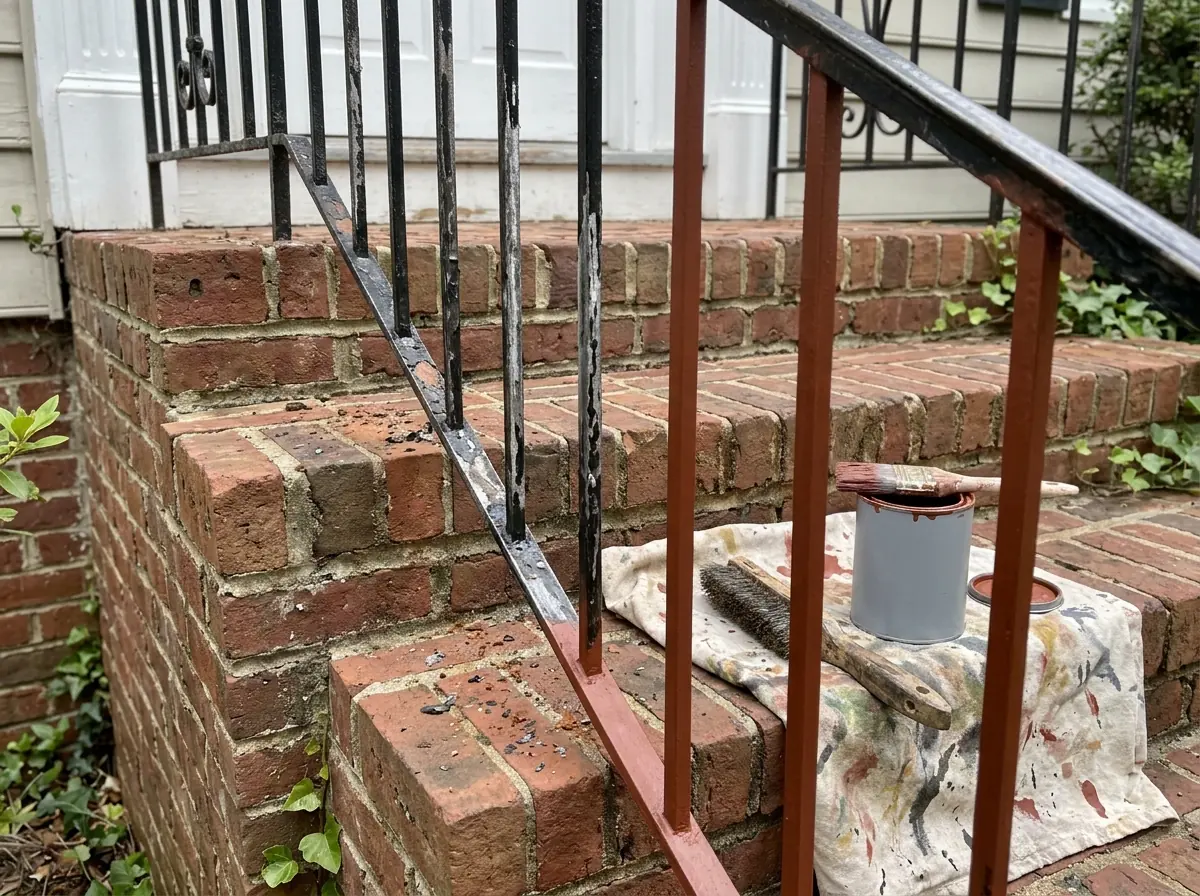
Exterior iron in a humid climate needs fresh paint before the rust gets underneath. The refinisher takes off loose paint and rust with a wire brush, treats what's left with a rust neutralizer, then applies a rust-inhibiting primer and a topcoat. Ornate scrolls take longer, since every curve is hand-brushed. Kept sealed or painted, iron can last a century, and repainting is what keeps it going that long.
- Rust removal (iron fence rates): $7 to $10 per linear foot
- Repainting (iron fence rates): $10 to $12 per linear foot
- Upkeep: a regular coat of paint or sealant keeps rust off outdoor iron
Powder Coating Metal Railings
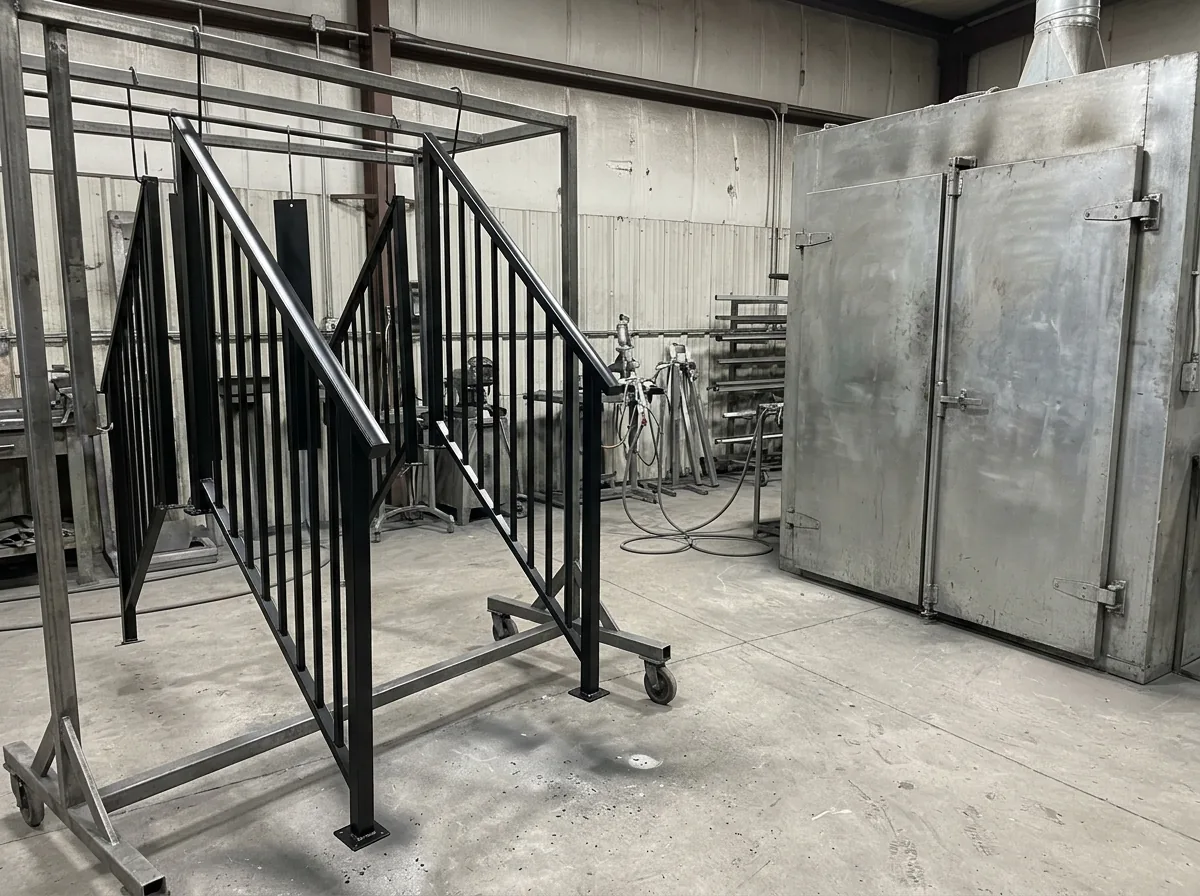
Powder coating is a dry powder sprayed onto bare metal and baked in an oven until it fuses into a hard shell. It outlasts brushed paint, but because it needs the oven, the railing sections have to come off the stair and go to a shop. Aluminum railings are often powder coated, and older iron or aluminum can be stripped and recoated in a new color.
- Cost: about $8 to $12 per linear foot of railing, labor included
- Sandblasting first, if not included: $2 to $5 per square foot
- Shop time: a few hours to coat, with curing from hours to days depending on thickness
Why Tallahassee homeowners call Tallahassee Stair Railing
- Free for homeowners: the installer quotes you directly
- Your request goes to one railing installer, not a call list
- Ask for the rail height, baluster gap and material in writing
- Ask for a written quote before paying any deposit
Lead-Safe Railing Refinishing in Older Tallahassee Homes
About a third of the homes in Tallahassee were built before 1980, which puts many original painted railings in range of EPA's Renovation, Repair and Painting (RRP) rule. The rule covers paid work that disturbs paint in housing built before 1978. Paint testing isn't mandatory, but without a record showing the paint is lead-free, the rule applies.
Who must be certified
any firm paid to do the work, sole proprietors includedSmall-job exemption
6 square feet of disturbed paint or less per room inside, 20 square feet or less outsideBanned methods
open-flame burning or torching of painted surfacesRestricted methods
power sanding, grinding, needle guns and sandblasting on painted surfaces, unless the machine has a shroud and a HEPA vacuum attachmentHeat guns
allowed only below 1,100 degrees Fahrenheit
Homes built in 1978 or later fall outside the rule. For anything older, ask for the firm's RRP certification before the stripping starts.
Stair Railing Refinishing Cost and Timeline
HomeAdvisor puts labor at only 20% to 30% of a typical refinishing bill, so prep and finish choices drive most of the price. A clear coat over a sanded rail costs least. A color change, a multi-step stain or matching a new rail to old balusters takes more time. A crew can usually do the bulk of a stair and railing in one day, but each coat of stain and sealer still needs its drying time before the next. Powder-coated sections stay off the stair until they're coated and cured.
Ask for the quote to spell out:
- which parts are stripped to bare material and which are scuffed and recoated
- the primer and topcoat, or the powder color, by name
- whether lead-safe setup and cleanup are included for a pre-1978 house
- who removes and reinstalls powder-coated sections, and what holds the stair safe while they're gone