
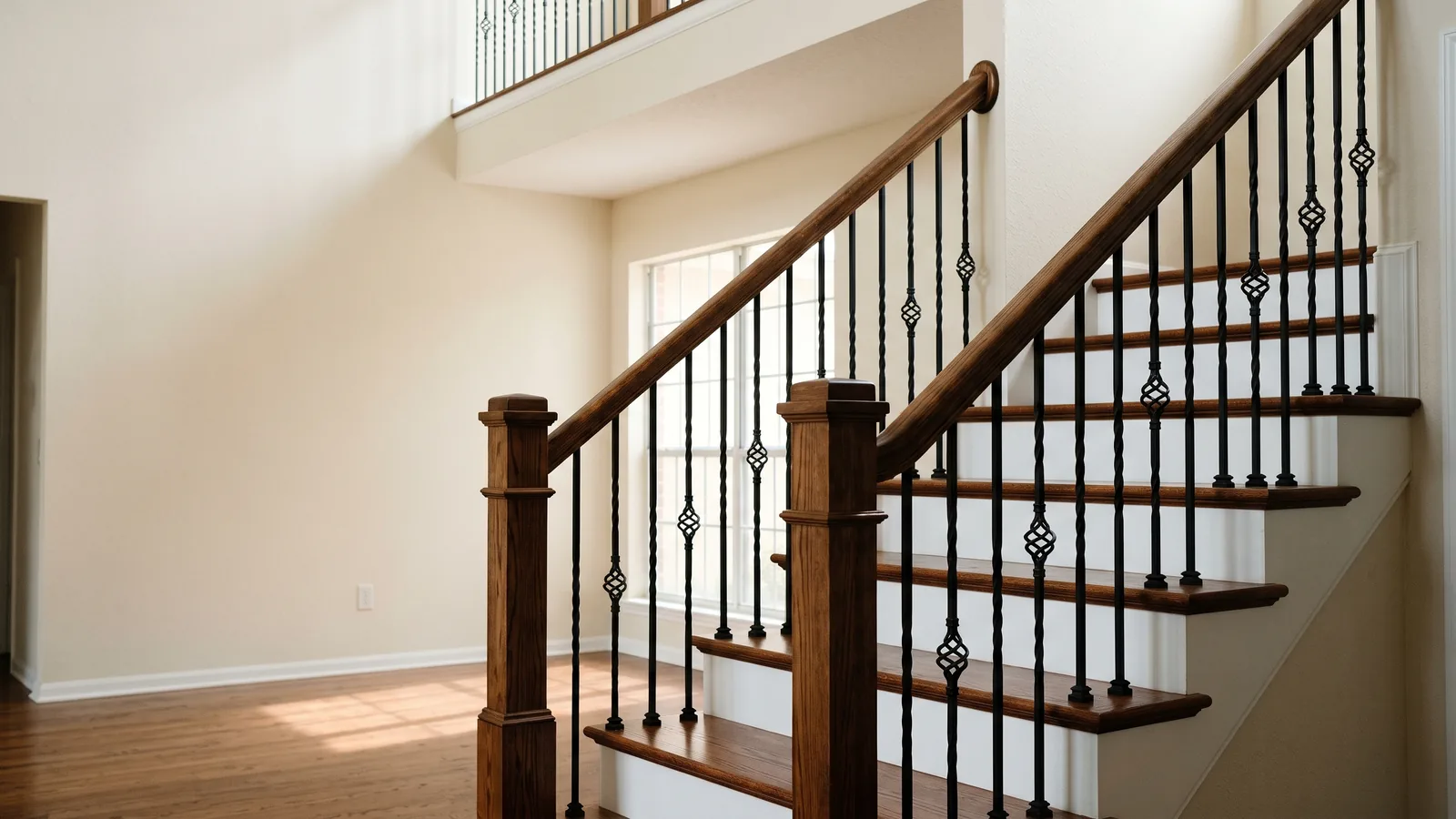
Handrail Installation Types in Tallahassee
The Florida Building Code, Residential, asks the same four things of every stair handrail. It has to be there on any flight of four or more risers, sit at the right height, be easy to grip, and run the full flight. How a rail meets those rules changes with the stair.
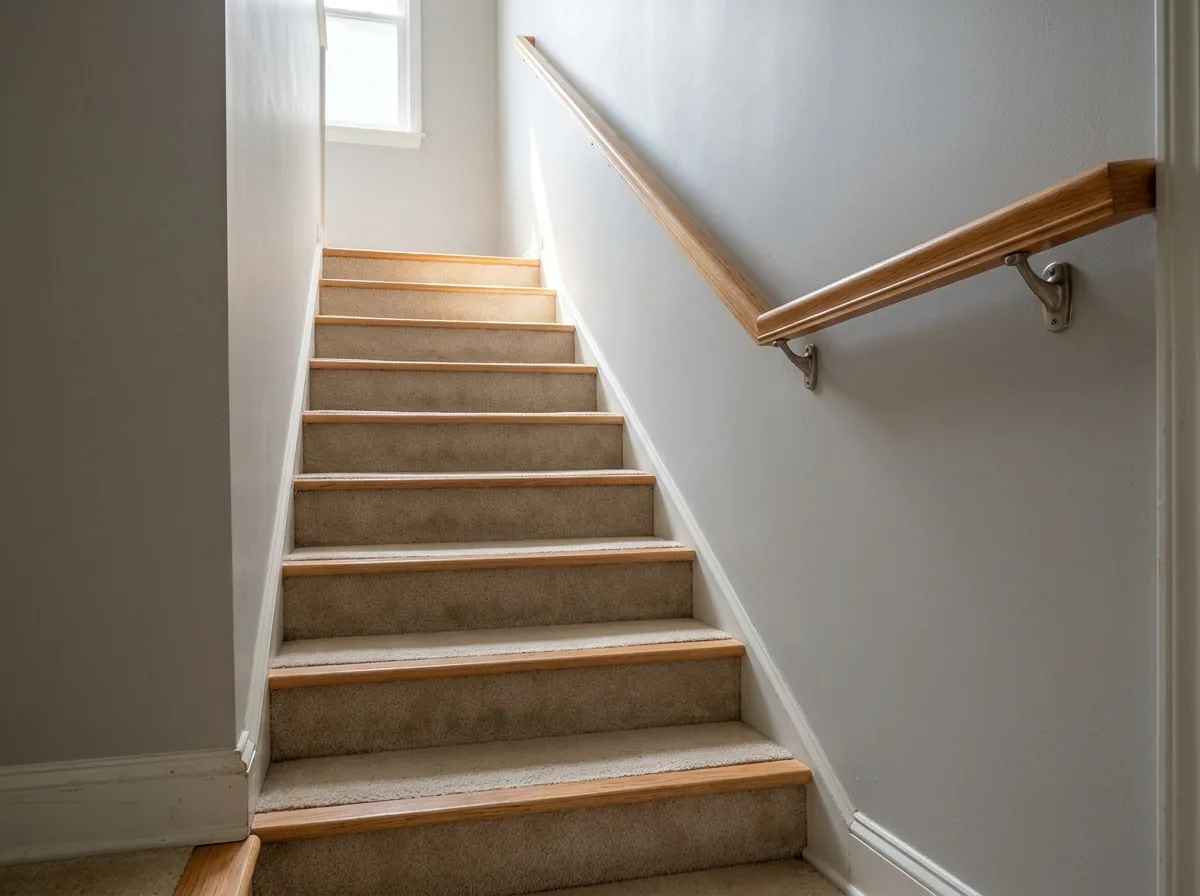
Wall-Mounted Handrails
Most closed stairs get a rail on brackets screwed to the wall. The rail has to stand off far enough for a hand to wrap around it, but not so far that it narrows the stair. Bracket screws need something solid behind the drywall, so ask the installer to locate studs or add blocking where a bracket lands between them.
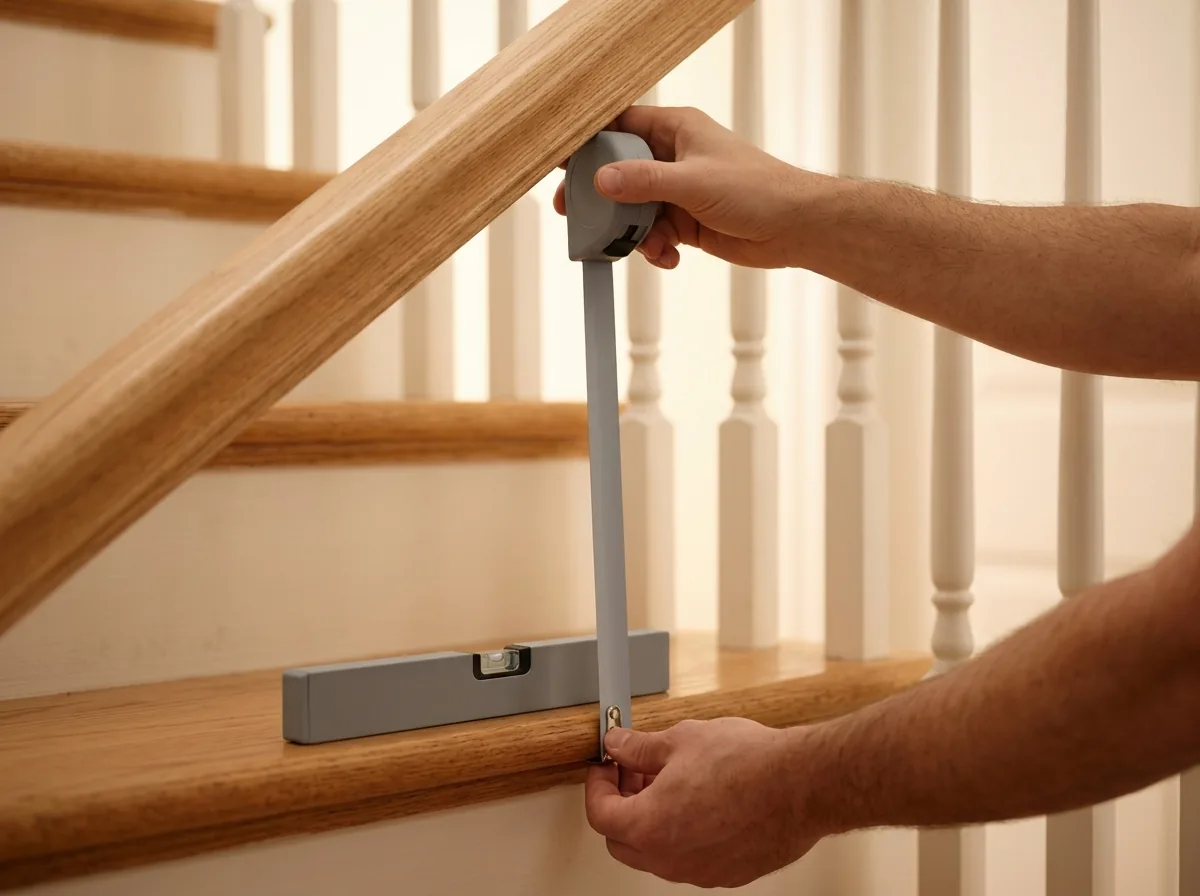
- Height: 34 to 38 inches above the sloped line of the nosings
- Wall gap: at least 1-1/2 inches between rail and wall
- Projection: no more than 4-1/2 inches into the stair width
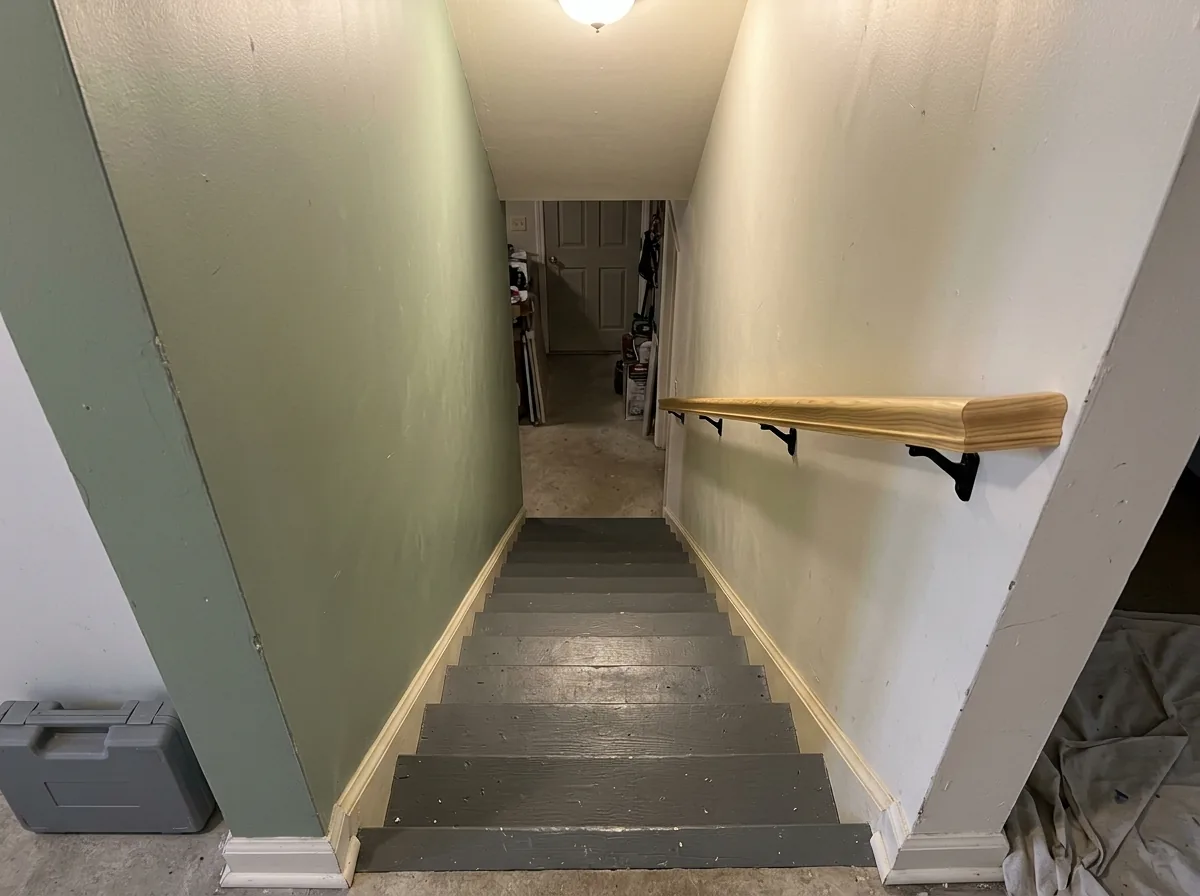
Basement and Closed-Stairwell Handrails
Basement stairs and stairs boxed in between two walls still count as a flight. Any flight with four or more risers needs a proper handrail on at least one side. A basement stair that is open on one side also needs a guard on that side; the guard heights and gap limits are on the code upgrades page.
- Trigger: four or more risers in the flight
- Ends: returned to the wall or stopped at a newel or safety terminal, never left loose
- Grip: a plain 2x4 is wider than the 2-1/4-inch limit, so it only passes with milled finger recesses
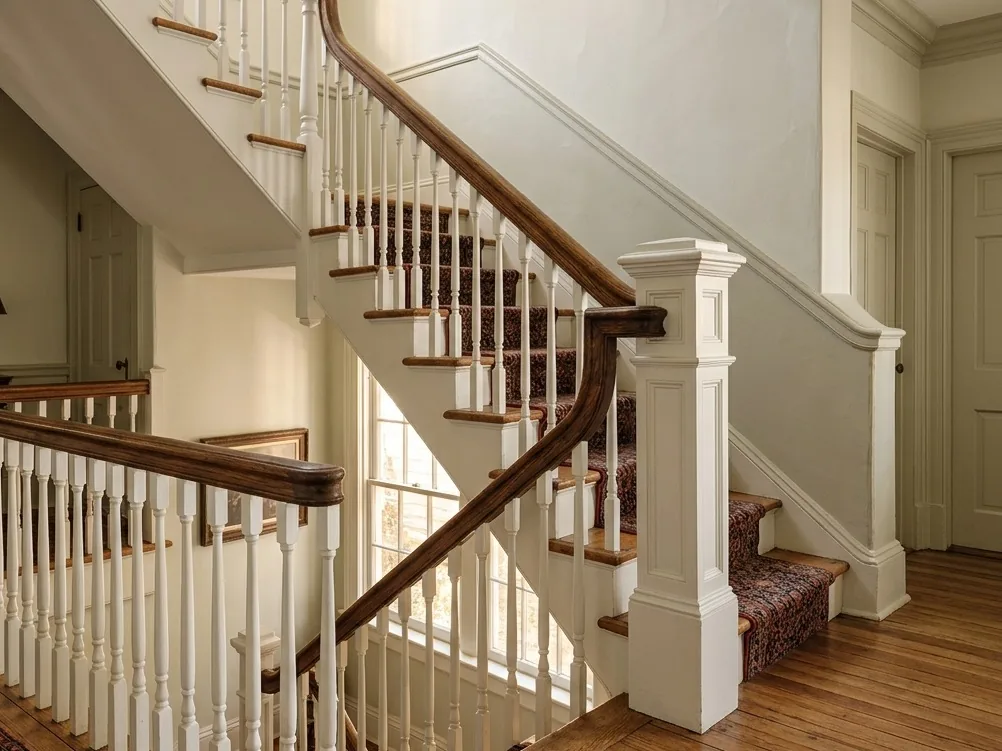
Continuous Handrails Around Landings
On an L-shaped or U-shaped stair, each flight needs its own rail running from above the top riser to above the bottom riser. At a turn the code lets a newel post interrupt the rail. Where fittings such as goosenecks carry the rail smoothly from one flight to the next, the rail may rise above 38 inches at the fitting itself. A rail that stops a couple of treads short of the top fails the continuity rule.
- Run: the full flight, top riser to bottom riser
- At the turn: a newel post or a continuous fitting
- Over the bottom tread: a volute, turnout or starting newel is allowed
Metal Pipe Handrails
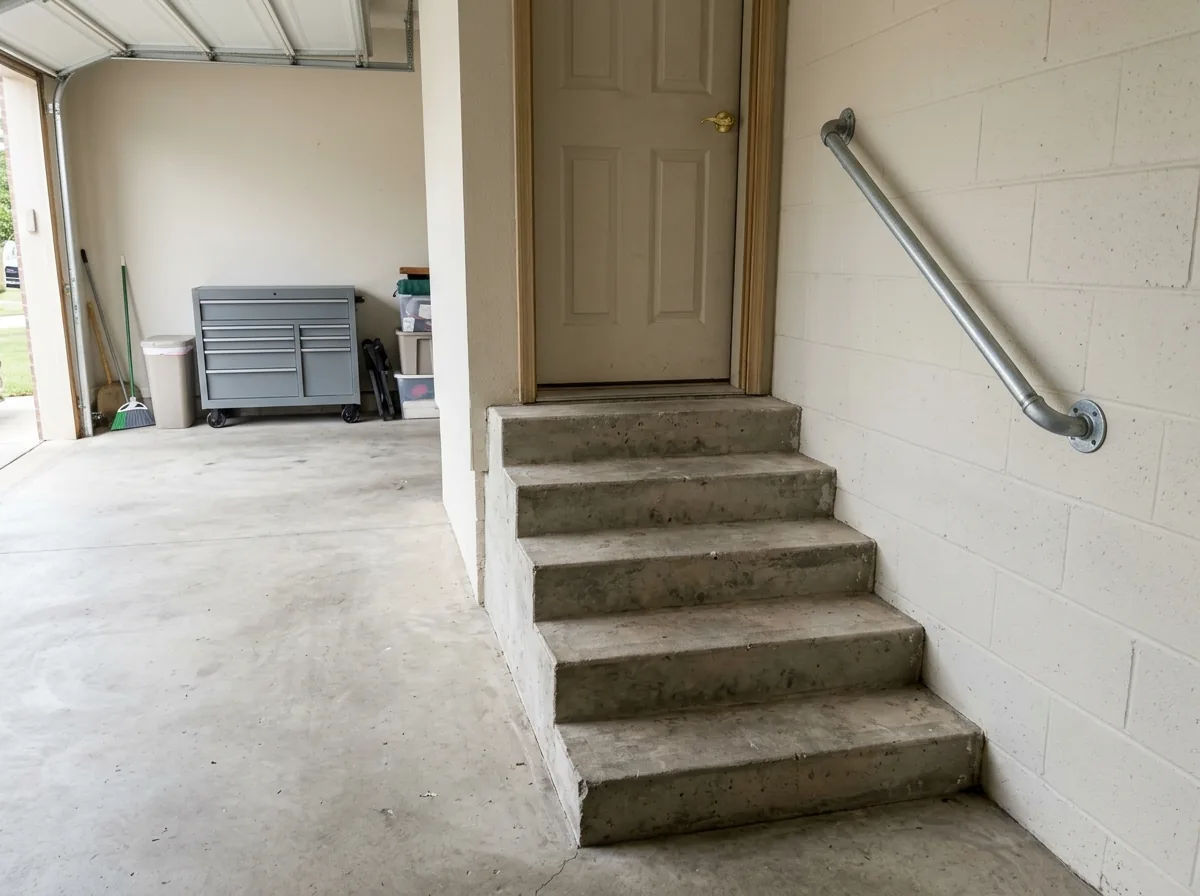
Round steel pipe is the plain, tough choice for garage steps, utility stairs and outside steps. Pipe in the code's size window grips well, and outdoors it should be galvanized or otherwise protected so rust doesn't take hold.
- Outside diameter: 1-1/4 to 2 inches for a round rail
- Non-round rails: 4 to 6-1/4 inches around, no more than 2-1/4 inches across
- Outdoor cost: about $596 to $1,847 for an exterior handrail install, nationally
Why Tallahassee homeowners call Tallahassee Stair Railing
- Free for homeowners: the installer quotes you directly
- Your request goes to one railing installer, not a call list
- Ask for the rail height, baluster gap and material in writing
- Ask for a written quote before paying any deposit
Handrail Installation Cost and Timeline
Thumbtack's national figures for a stair handrail or banister install run from $675 to $2,076. A short, plain rail can come in near $290, and long or complex jobs reach about $4,597. Inside work averages $725 to $2,263, slightly above outside work. A straight rail costs less than one with curves or several turns, and rail length drives both material and labor.
The work itself is short. HomeAdvisor puts most railing installs at 5 to 10 hours of labor once the parts are on hand. A rail bent to fit a turn, or metal cut and finished to order, adds lead time before that day.
Before you sign, ask for:
- The rail length, profile and diameter in writing, so you can check it against the 1-1/4 to 2-inch rule
- The number of brackets and what each one screws into
How both ends finish
Wall returns, newels or safety terminals- Whether the job needs a permit (permit rules)
Handrail Rules for Older Tallahassee Homes
About a third of Tallahassee's homes were built before 1980. A rail that met the code of its day can still be too high, too low or too chunky to grip by today's standard. The City of Tallahassee's own stair and handrail handout, issued by Growth Management's Building Inspection Division, uses the same 34-to-38-inch height and the four-riser trigger. A new rail on an old stair is a chance to fix all of it at once. For a second rail on the other side of the stair, see handrails for seniors. For businesses and public buildings, the stricter standard is on the ADA handrails page.