
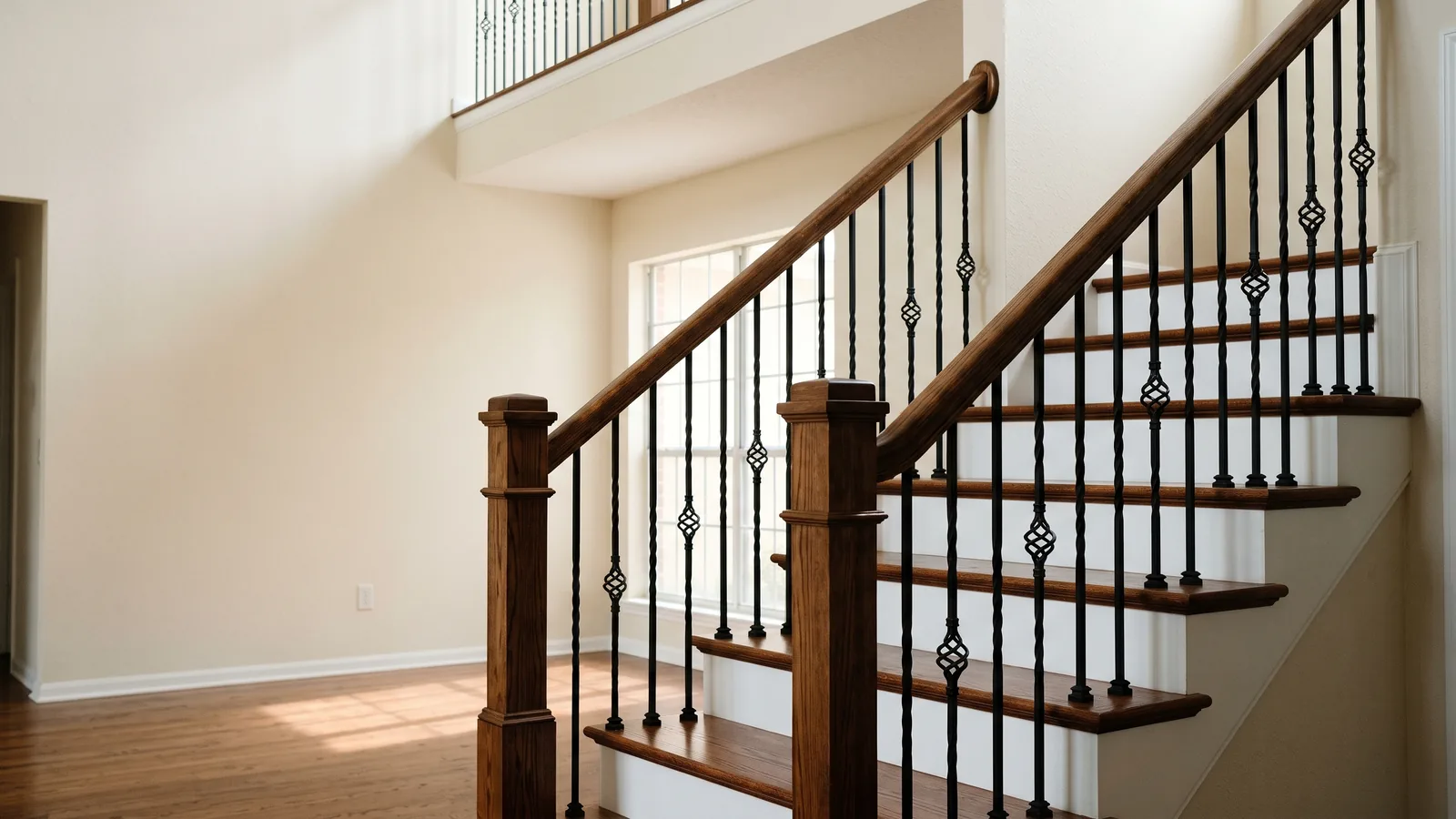
Cable Railing Types in Tallahassee
Every cable railing has the same parts: end posts that hold the tensioners, line posts the cables pass through, a top rail, and stainless cable, typically 5/32 inch across in Viewrail's systems. The types differ in where the rail goes and what the posts are made of.
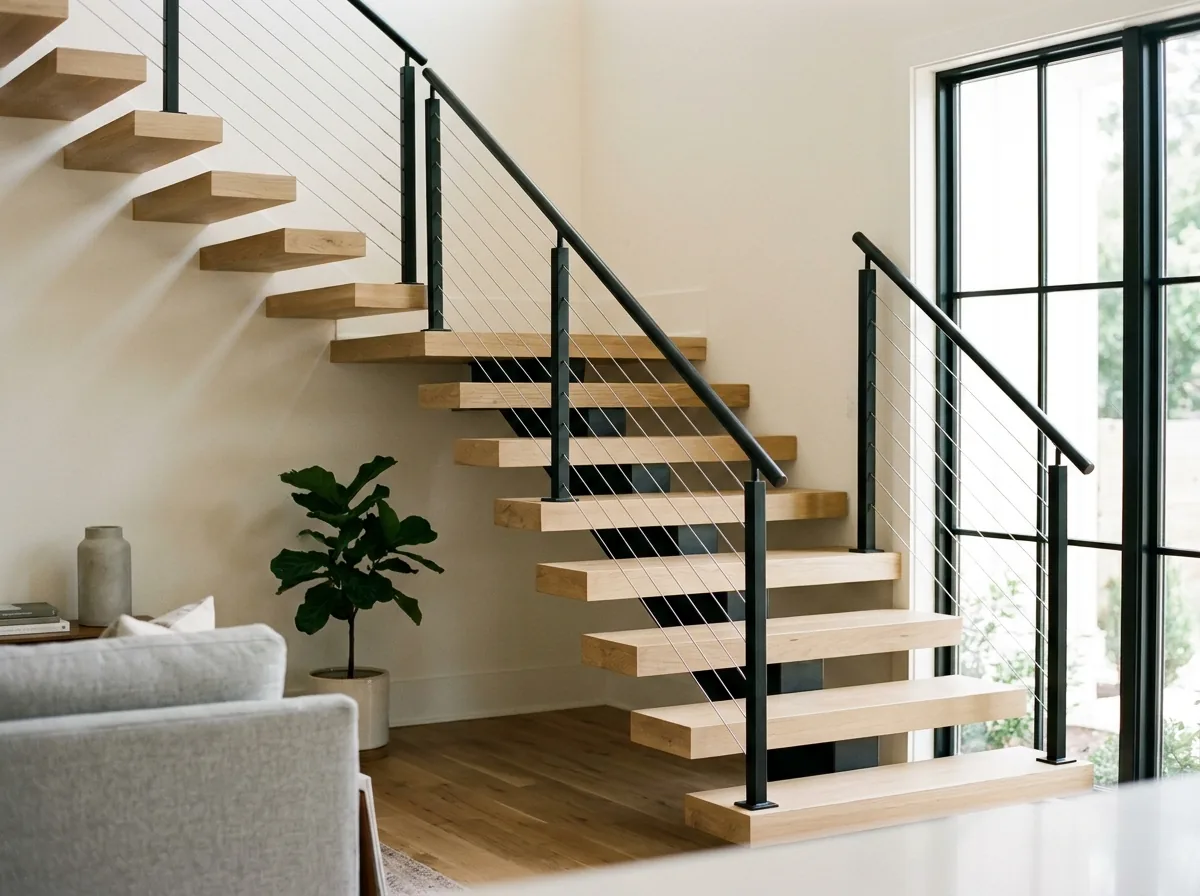
Interior Stair Cable Railings
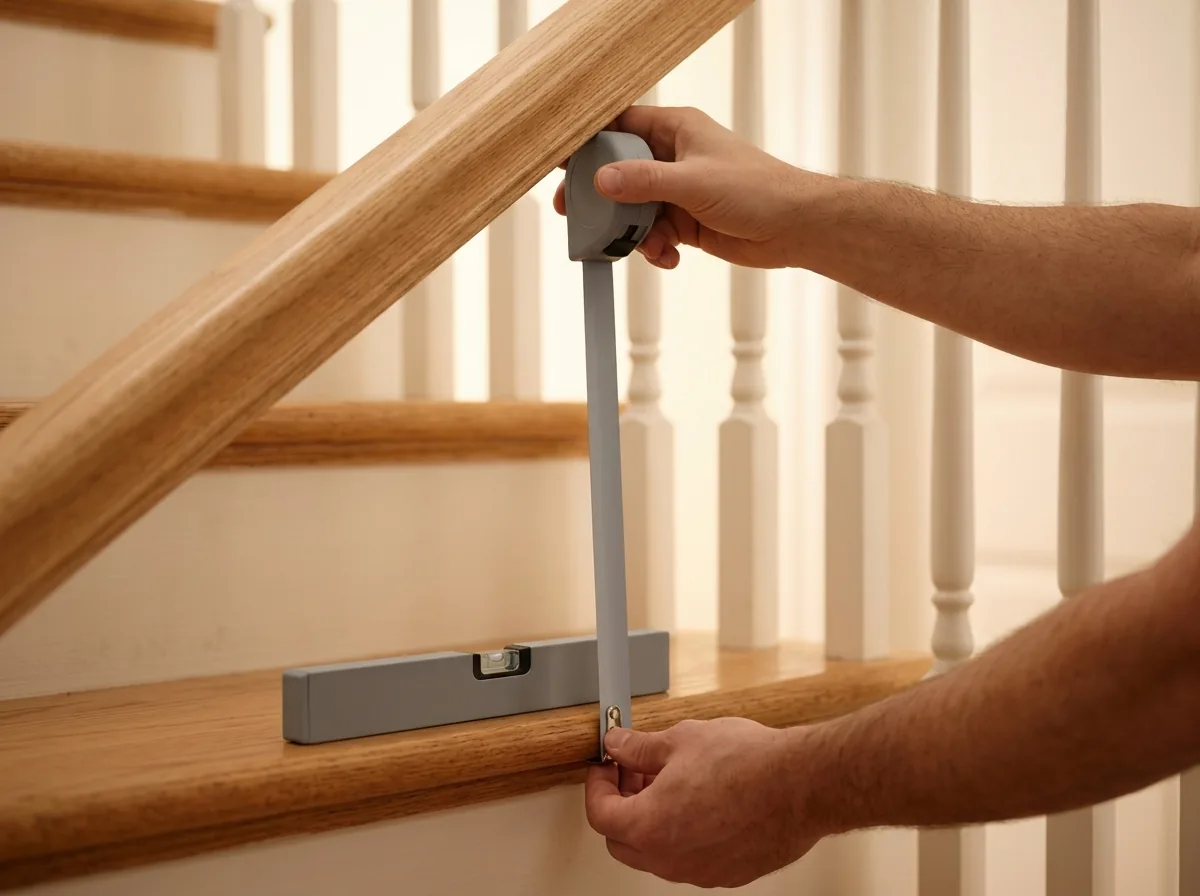
Indoors, cable keeps an open stair feeling open, without the weight of balusters. The stair adds two complications. The cables run at the stair's angle, so the installer needs the exact rise and run to order angle fittings and keep the cables clear of the tread nosings. Post spacing is measured along the slope, not level, and Viewrail keeps it at 4 feet or less. The cable spacing then has to hold the stair opening limit under load as well as at rest.
- Cable spacing: about 3-1/8 inches on center in one manufacturer's guidance
- Post spacing: 4 feet maximum, measured along the stair's diagonal
- Handrail: the top rail may need to be a graspable round rail (handrail rules)
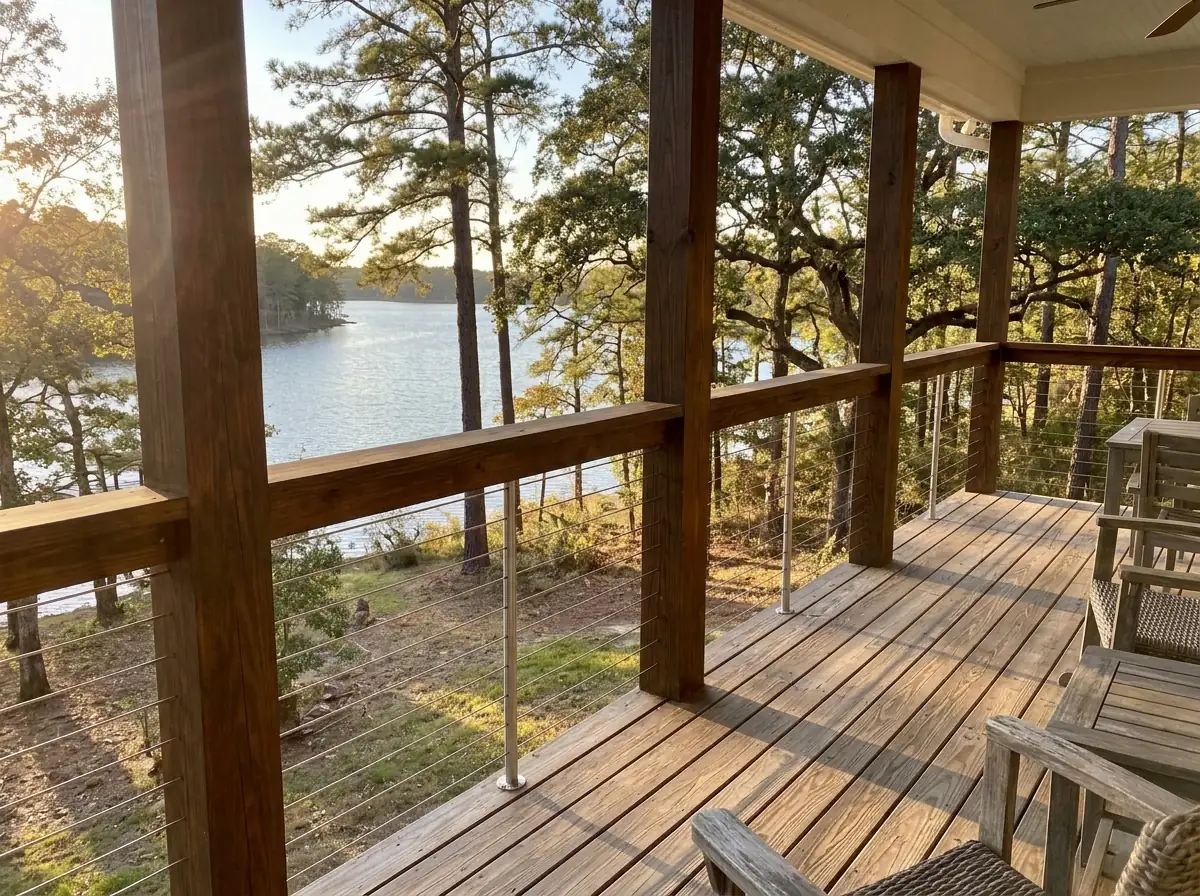
Deck and Porch Cable Railings
Outside, the draw is the view: the slim cables nearly disappear next to balusters, which suits a deck facing woods or water. The trade-off is weather. Angi lists Type 304 stainless as the common grade and Type 316 for salty coastal air, and galvanized carbon-steel cable is cheaper but corrodes more easily. Viewrail adds that braided cable can trap moisture in its grooves and suggests solid rod for harsh coastal sites. A raised deck guard also carries a 200-pound load rule.
- Cable grade: 304 for most sites; 316 near salt water
- Cable cost: stainless wire $0.50 to $1.70 a foot, galvanized $0.35 to $0.45
- Upkeep: clean the stainless, apply a protective polish outdoors, check tension periodically
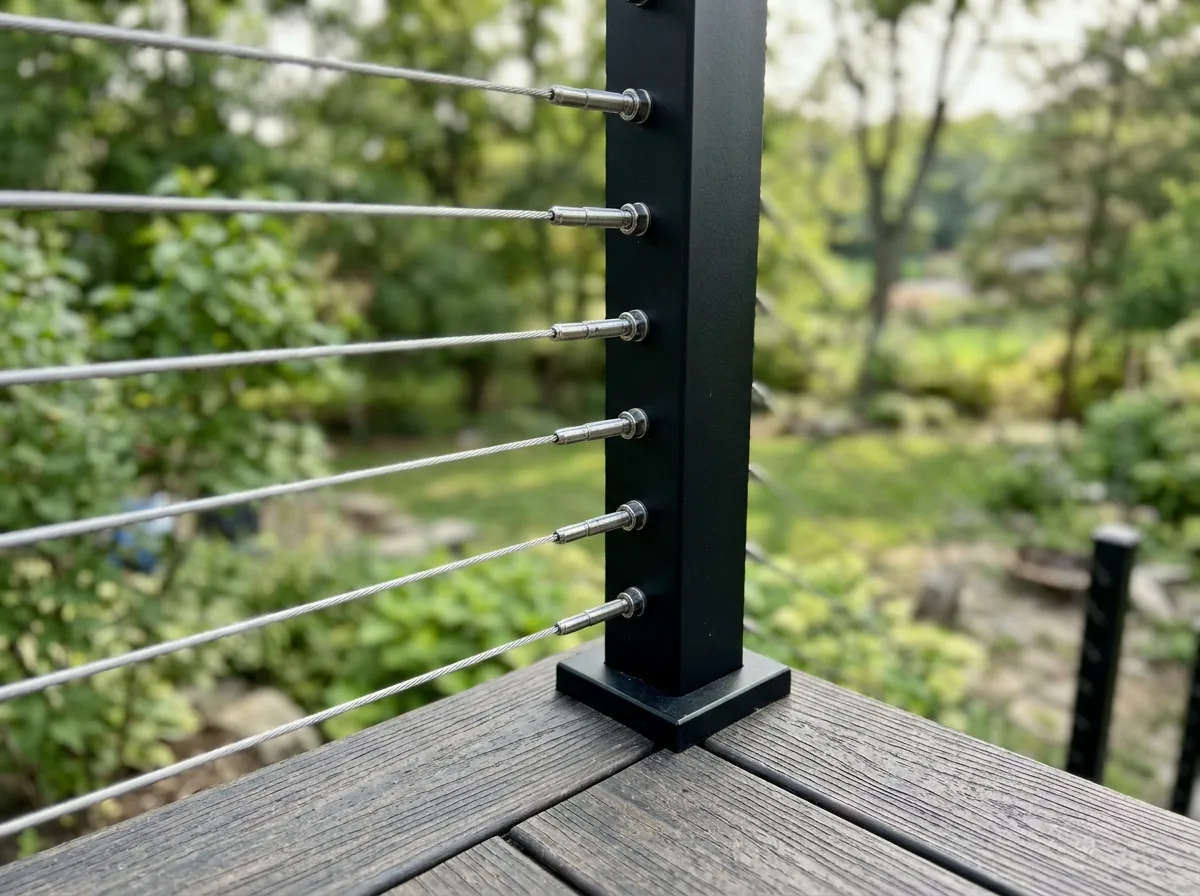
Metal-Post Cable Systems
Metal posts are the most popular choice in Viewrail's experience. Aluminum and stainless posts are slimmer than wood, need little upkeep, and come pre-drilled for the cable. Posts go about 4 feet apart on center. Closer spacing limits how far the cables bow when pushed and makes tensioning easier.
- Post spacing: about 4 feet on center
- Post cost: round stainless $110 to $200 each, square stainless $140 to $230
- Fittings: swaged (crimped onto the cable, the most common) or swageless (mechanical lock)
Wood-Post Cable Systems
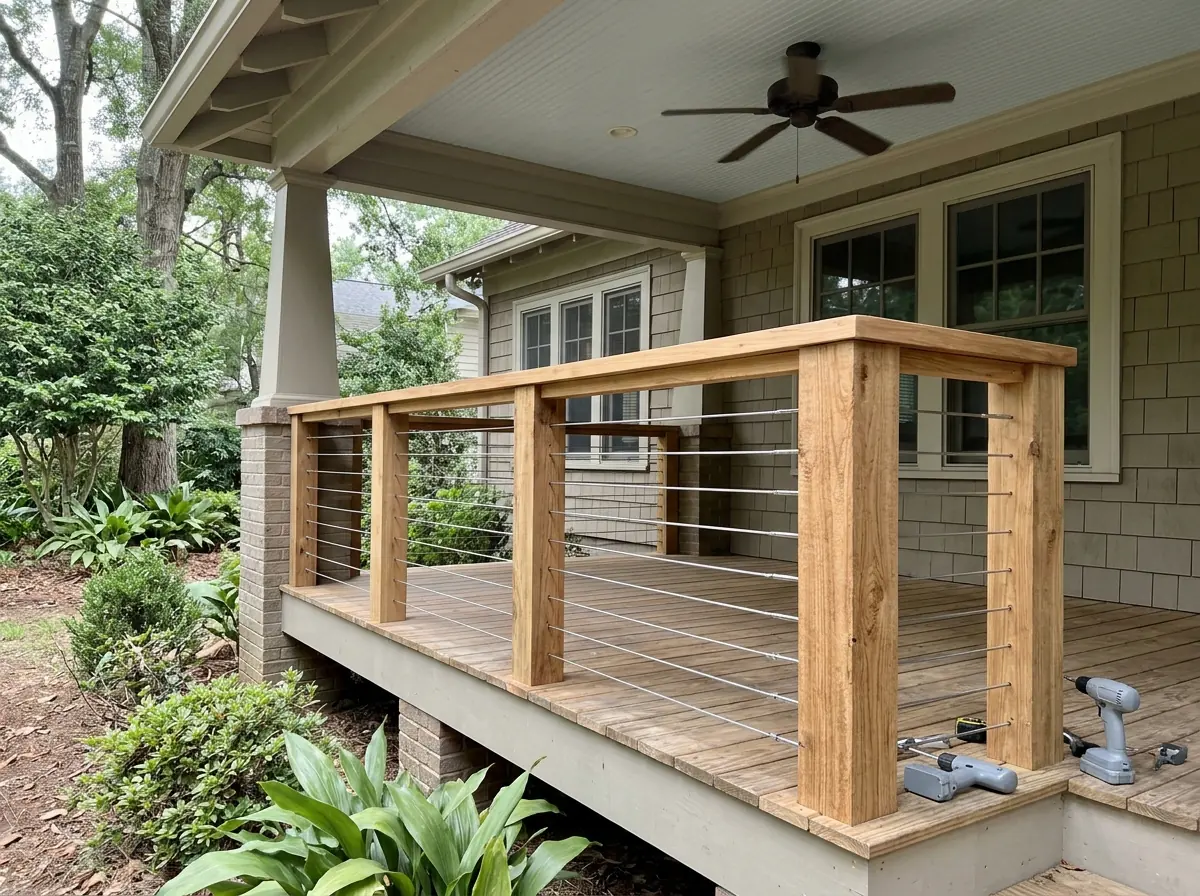
Cable through wood posts gives a warmer look and is often the cheaper system, especially when existing posts can stay. Wood needs more structure than metal to resist the pull of every tight cable: Viewrail's guidance calls for a structural post every 8 feet with intermediate posts 4 feet between, and code typically wants at least a 4x4. Outdoor wood posts need yearly maintenance, and a good installer will check existing posts for rot before drilling them.
- Post size: 4x4 minimum, per typical code
- Layout: structural posts every 8 feet, intermediates at 4 feet
- Top rail: aluminum or wood top rail runs $30 to $60 a foot in Angi's guide
Why Tallahassee homeowners call Tallahassee Stair Railing
- Free for homeowners: the installer quotes you directly
- Your request goes to one railing installer, not a call list
- Ask for the rail height, baluster gap and material in writing
- Ask for a written quote before paying any deposit
Cable Railing Cost in Tallahassee
Angi breaks cable railing into parts, all national figures:
| Part | Typical cost |
|---|---|
| Complete system | $75 to $260 per linear foot |
| Installation labor | $20 to $50 per linear foot |
| Stainless posts | $110 to $230 each |
| Stainless top rail | about $20 per linear foot |
| Aluminum or wood top rail | $30 to $60 per linear foot |
| Stainless cable | $0.50 to $1.70 per foot |
The cable itself is cheap. Posts, fittings and labor are where the money goes, which is why post count and post material move the quote more than the length of cable. Cable railing lasts multiple decades with maintenance, and HomeAdvisor gives steel cable a 25-year-plus life with yearly upkeep.
Cable Railing Quotes: What to Ask For
Spacing on paper
cable spacing and post spacing, and how the installer will show the gaps pass under loadStainless grade
304 or 316, for cable and fittingsPost plan
metal or wood, new or existing, and how each end post is anchoredTension check
when to re-tension, and whether a follow-up visit is offeredHorizontal infill
some jurisdictions restrict it; ask the installer to confirm with the city or county firstUp-front money
if the installer wants more than 10% before starting, Florida's deposit rule sets the permit and start deadlines
For a raised deck, the permit question goes to the City of Tallahassee's Growth Management Department inside city limits and to Leon County outside them; the permits page covers when one is needed. And since Tallahassee is only about 20 to 30 miles inland, the 304 or 316 question is worth asking out loud rather than leaving it to the order form.