
Glass Stair Railing Types in Tallahassee
What holds the glass decides almost everything else: how thick the panels must be, whether the stair needs a separate handrail, and how much metal shows. These are the four systems an installer will price.
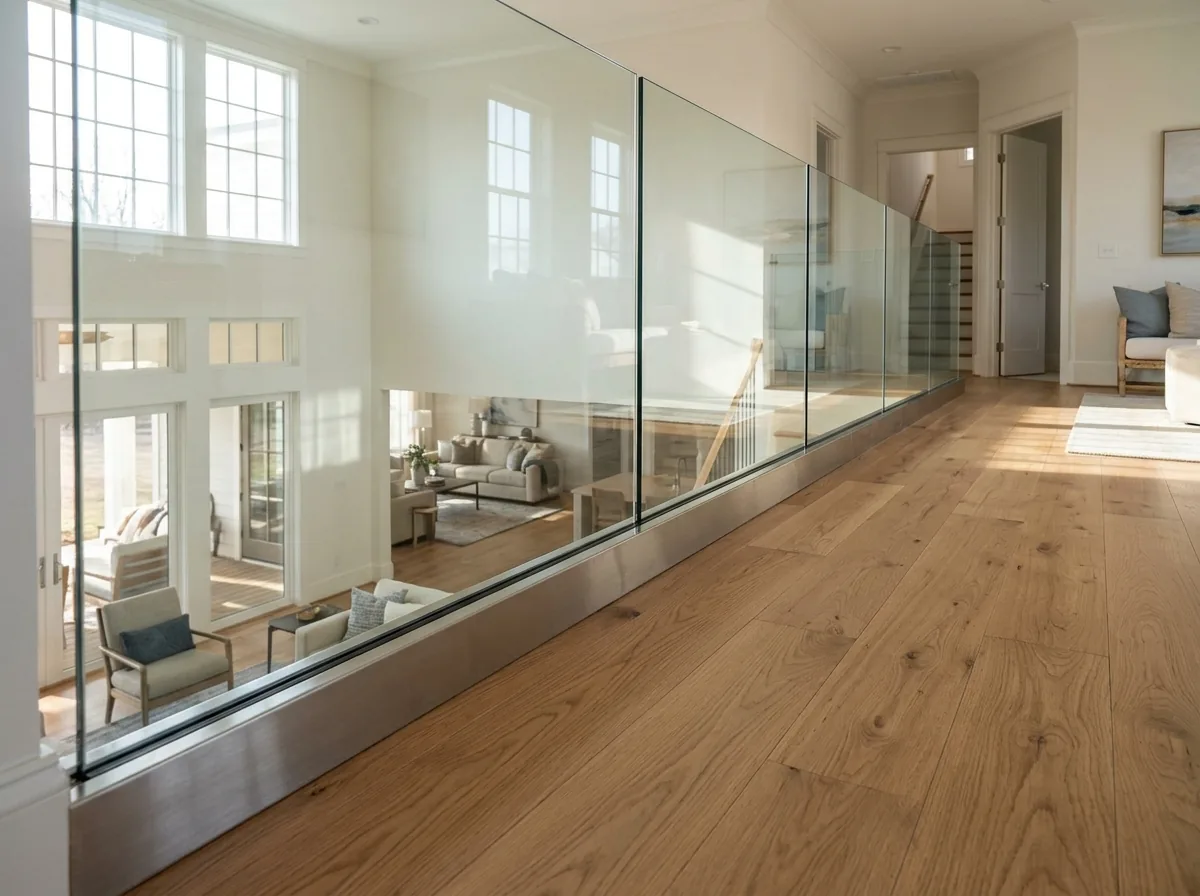
Frameless Base-Shoe Glass
A base shoe is a continuous metal channel fixed to the floor or the stair's edge, with the glass clamped into it and nothing at the sides. Because the panel alone resists a push, frameless systems use thicker glass, usually 3/8 to 1/2 inch in Viewrail's guidance. In Florida a frameless guard with no top rail is only allowed when the panels are laminated, have two or more equal plies, and pass the ASTM E2353 breakage test. Viewrail notes that frameless glass costs more than framed systems, because of the thicker glass and tighter hardware tolerances.
- Panel thickness: typically 3/8 to 1/2 inch for frameless
- Top rail: required unless the laminated panels are tested to ASTM E2353
- Best fit: interior stairs and loft edges where the view matters most
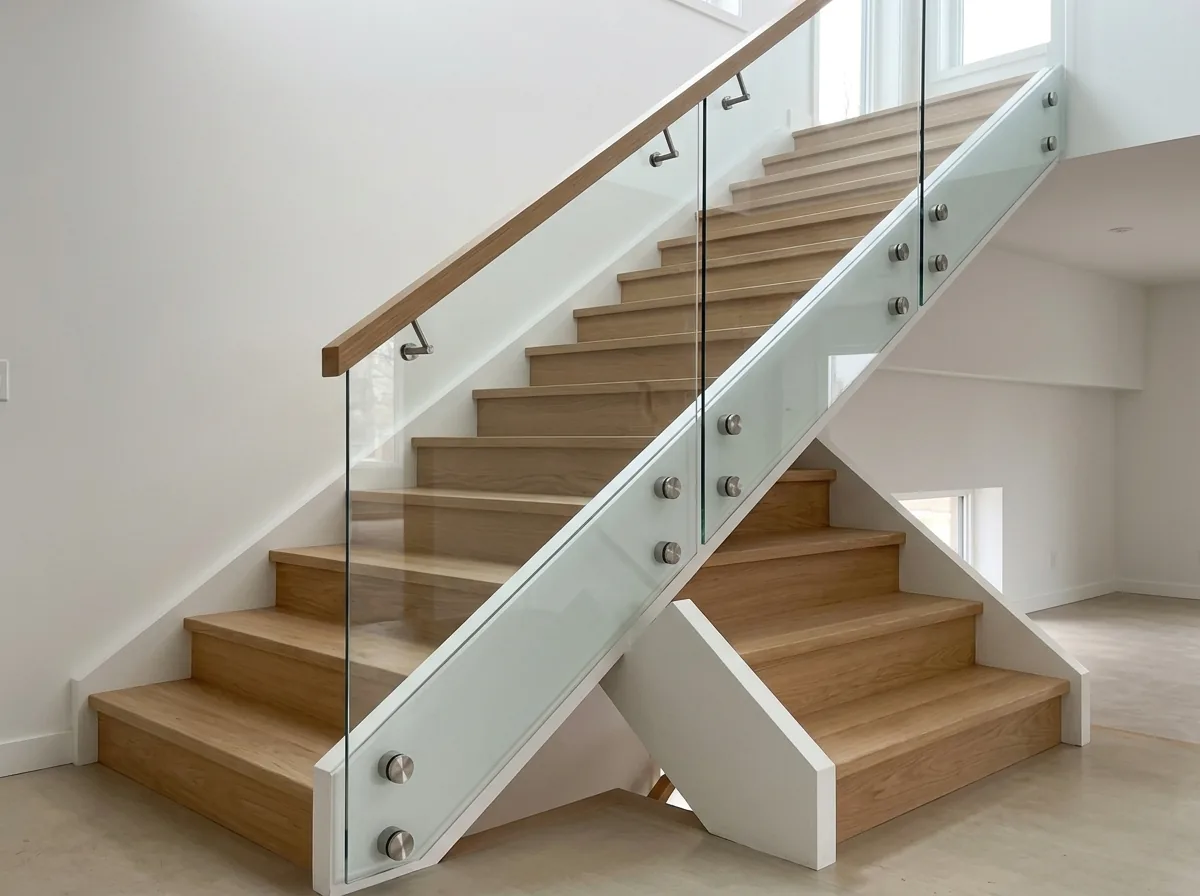
Standoff (Pinned) Glass Panels
Standoff pins bolt through pre-drilled holes in the glass into the side of the stair stringer or a floor fascia. The treads and floor stay completely clear of hardware. The stringer becomes the anchor for every panel, so a good installer will check that it is solid enough before quoting. The holes are part of the panel order, so measurements have to be exact.
- Hardware: round pins on the stringer face; no floor channel or posts
- Structure: a solid stringer or fascia is a must
- Watch for: the same top-rail rule as base-shoe glass
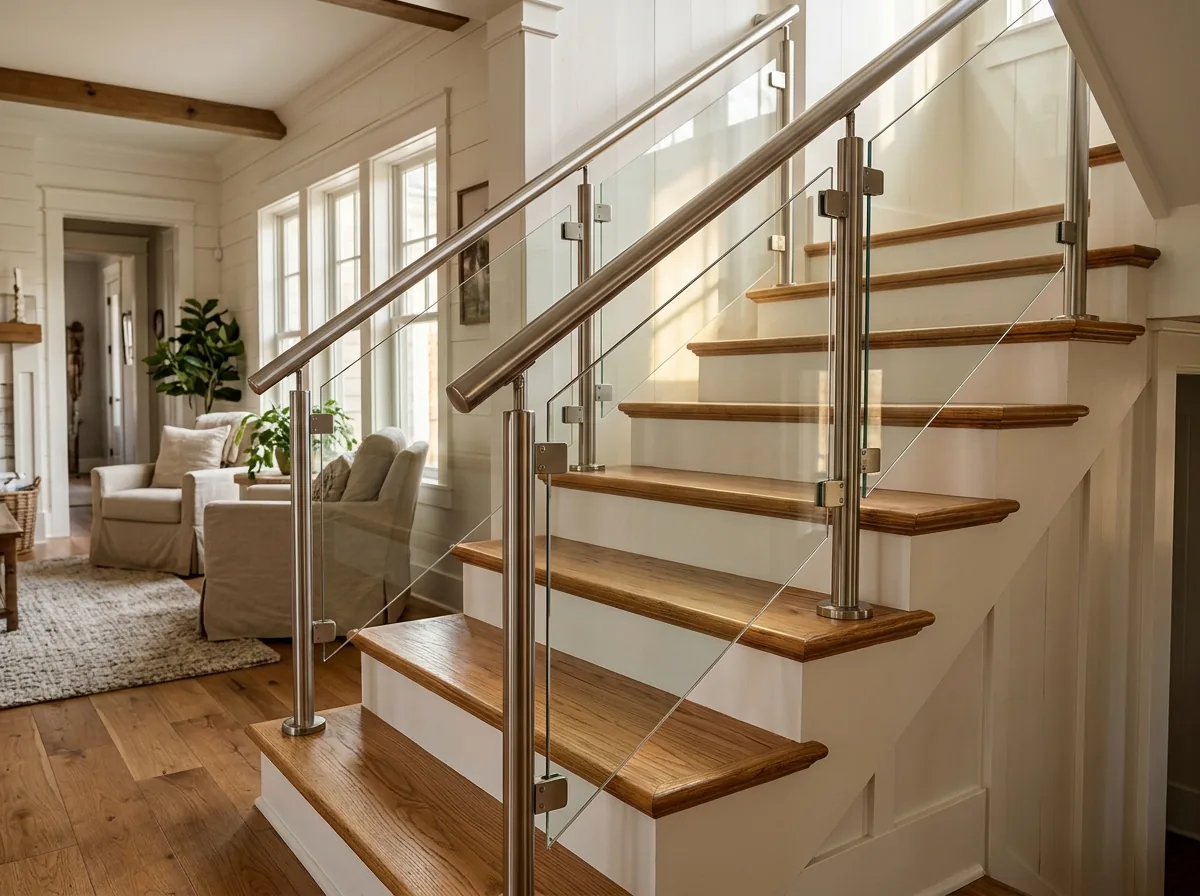
Post-and-Clamp Glass Railings
Posts every few feet carry the load, and clamps hold a glass panel between each pair. Viewrail calls this semi-frameless: the posts let the glass be somewhat thinner, so material costs less than a fully frameless system. Viewrail describes it as the practical middle ground: an open look without the frameless price.
- Cost: lower than frameless for the same length
- Lifespan: glass lasts indefinitely; posts and clamps about 20 to 25 years
- Finish: brushed stainless, black or powder-coated posts
Glass Panels with a Top Rail
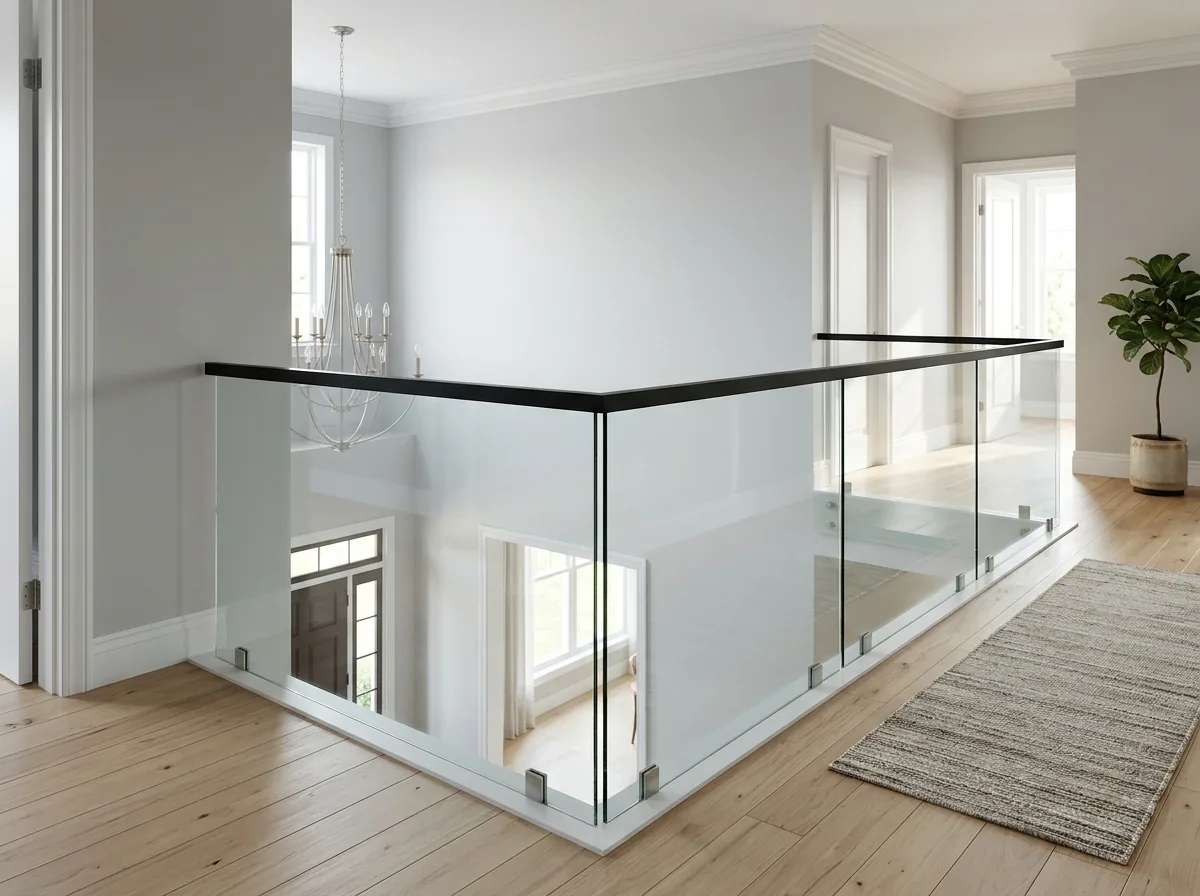
A cap or handrail fixed along the top of the glass ties the panels together. Under section 2407.1.2 of the Florida Building Code, a top rail on structural glass panels must rest on at least three panels or be supported some other way, so it stays up if one panel breaks. Tempered-only panels always need one. On stairs, the top piece may also need to work as a graspable handrail.
- Required: on structural glass panels unless the ASTM E2353 exception applies
- Support: carried by at least three panels, or otherwise held up if one fails
- Grip: a wide flat cap may not count as a handrail
Why Tallahassee homeowners call Tallahassee Stair Railing
- Free for homeowners: the installer quotes you directly
- Your request goes to one railing installer, not a call list
- Ask for the rail height, baluster gap and material in writing
- Ask for a written quote before paying any deposit
Glass Railing Code in Florida
Glass in a railing is held to stricter rules than wood or metal infill. The numbers below come from the 2023 Florida Building Code.
Hazardous location
the residential code counts any glass in a guard or railing as a hazardous location, which means safety glazing is required (R308.4.4)Laminated glass
the glass chapter of the building volume requires laminated glass made of fully tempered or heat-strengthened glass, at least 1/4 inch thick, in handrails and guards (2407.1)Tempered exception
single tempered glass is allowed only where there's no walking surface below, or that surface is protected from falling glassSafety factor
panels and supports are designed to the guard loads with a safety factor of four (2407.1.1)Wind-borne debris regions
exterior railing glass there must be laminated (2407.1.4.1); ask whether your address falls in one
Angi notes that laminated glass is unusual in homes because of its cost. In Florida, ask the installer which code section the quote's glass is built to, and get it in writing.
Glass Railing Cost in Tallahassee
Length is the biggest lever. Angi's guide works through it like this, nationally:
| Run of glass railing | Typical cost |
|---|---|
| 10 feet | $2,000 to $5,000 |
| 20 feet | $4,000 to $10,000 |
| 30 feet | $6,000 to $15,000 |
Labor makes up 20% to 50% of a glass railing bill, rising with complicated layouts or hard access. Angi's per-foot averages put laminated panels about $170 above tempered. Low-iron glass, which drops the faint green tint of standard glass, and premium hardware finishes add to the material line.
Glass Railing Quotes: What to Ask For
Glass spec
laminated or tempered, thickness, and the code section it meetsSystem
base shoe, standoff, post-and-clamp or top rail, and whether the stair gets a separate handrailHardware finish
grade of stainless or type of powder coat, especially outdoorsLead time
a good installer will give the fabrication and install dates in writingDeposit and permit
made-to-order glass often means a deposit, so read Florida's deposit rule first; ask too whether a permit is needed
Tallahassee sits about 20 to 30 miles inland, which puts outdoor hardware choices in a gray zone: vendor rules of thumb for upgrading to marine-grade stainless near salt water vary from about 3 to 10 miles. For a porch or deck run, ask the installer which grade the price assumes.