
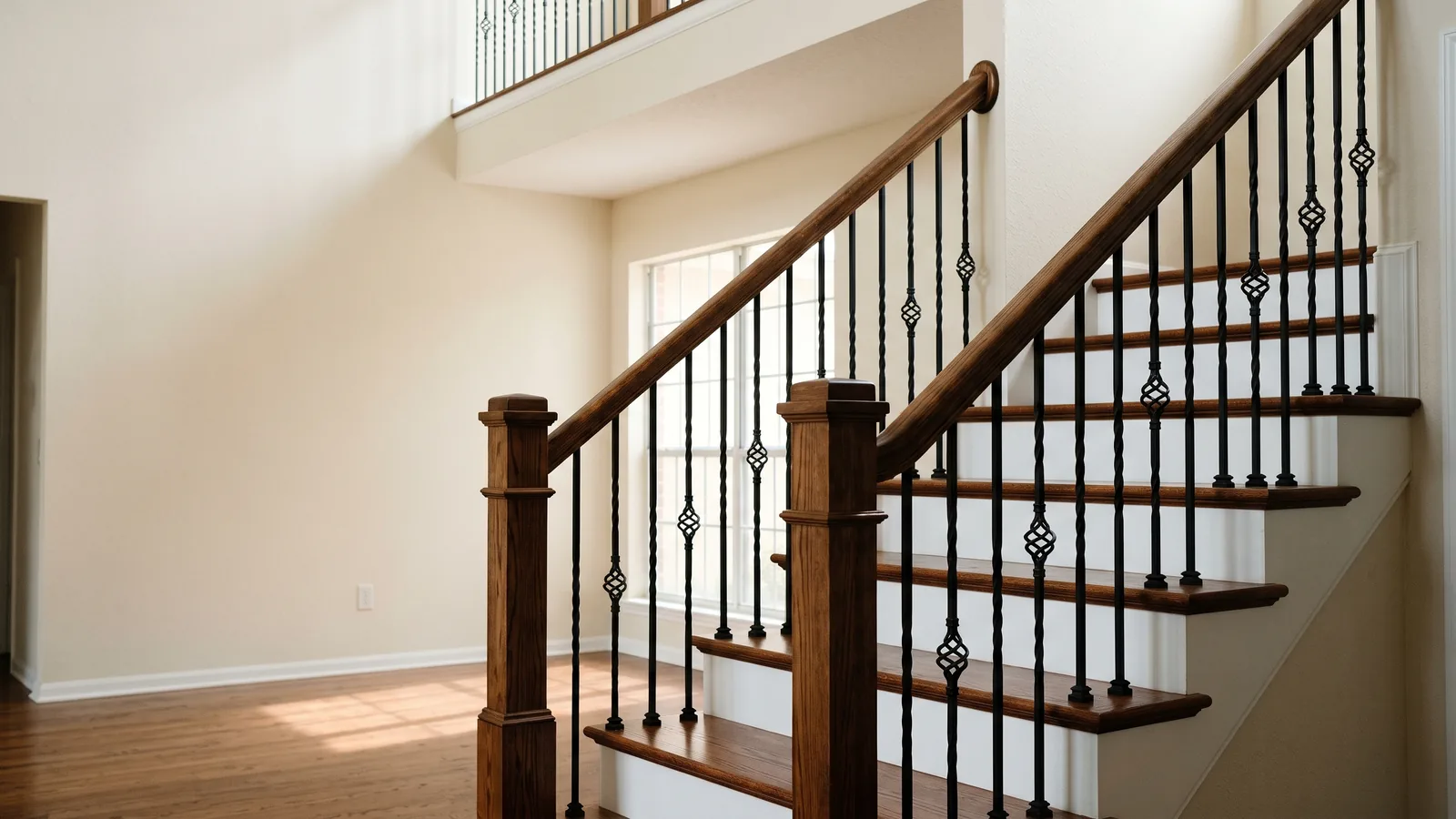
Stair Railing Code Upgrade Types in Tallahassee
A buyer's inspector may measure the railing against the current code rather than the one it was built under. Each upgrade below fixes one of those measurements.
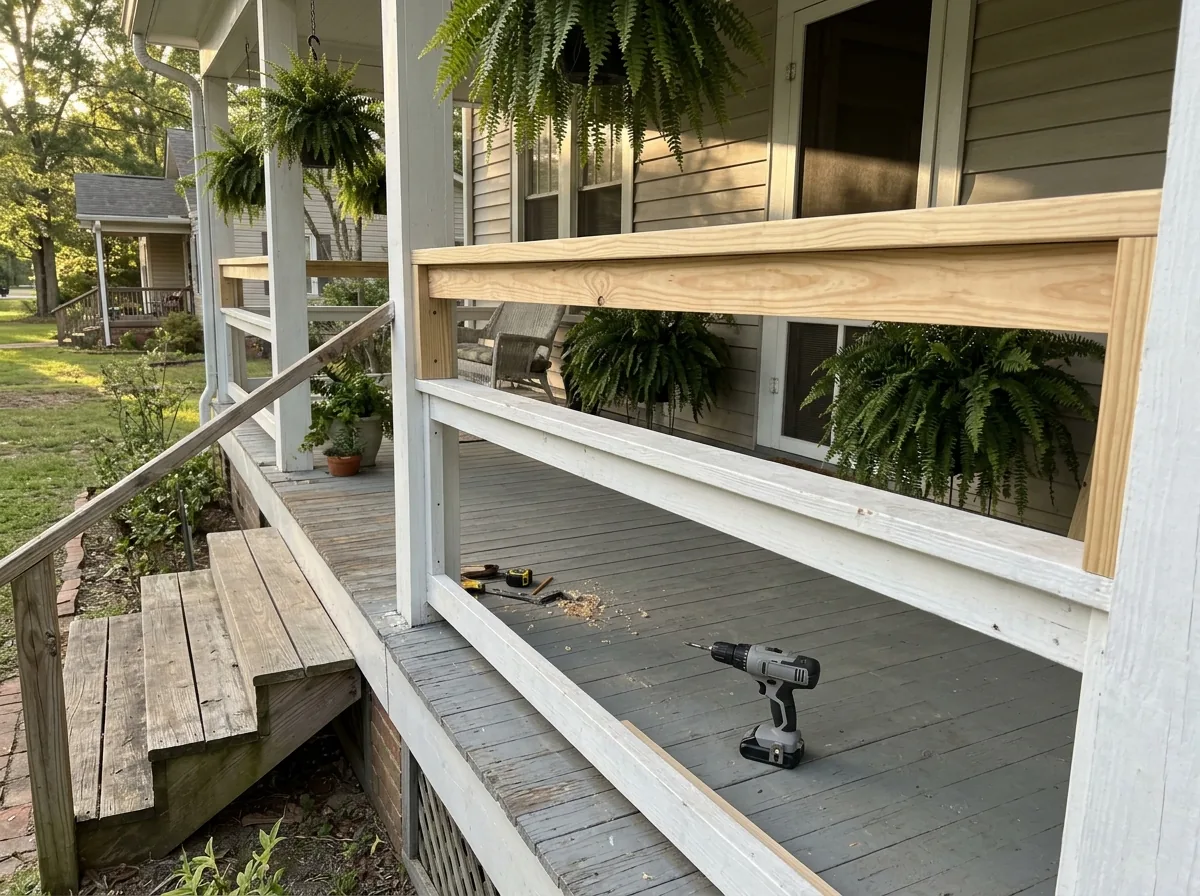
Low Guards Raised to Height
A porch, loft or deck stair built under an older code can have a guard a few inches short of today's minimum. The usual fix is taller posts with a new cap rail, or a new guard section where the old posts can't take the extra height. Ask whether the posts will be checked for the load a guard has to carry (load rule).
- When a guard is required: a drop of over 30 inches to the floor or grade, measured within 24 inches of the open edge
- Homes: 36 inches minimum from the walking surface
- Open side of a stair: 34 inches minimum from the nosing line; 34 to 38 inches if the guard top doubles as the handrail
- Commercial buildings: 42 inches, with the 30-inch drop measured within 36 inches of the edge
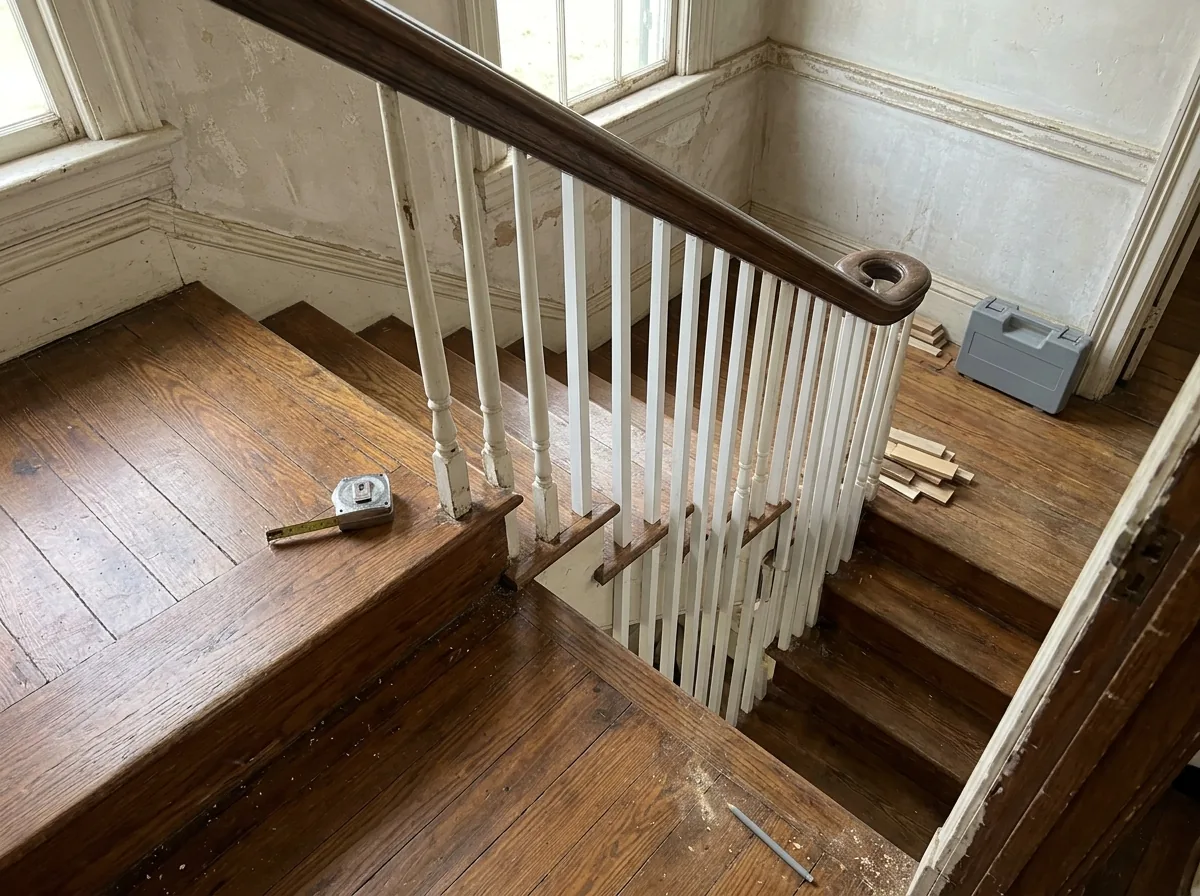
Wide Baluster Gaps Closed
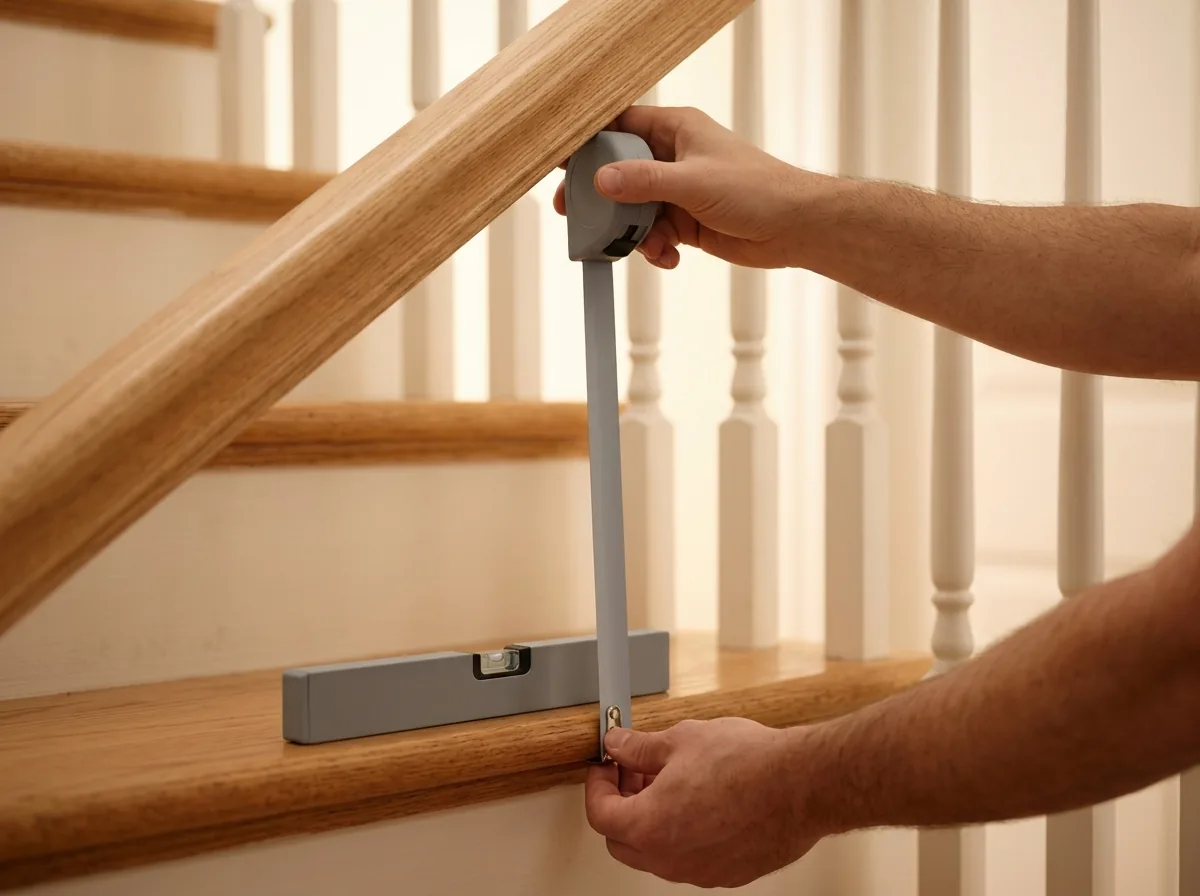
Balusters spaced for an older code can leave gaps wider than today's limits. The fix is usually to add a baluster between each existing pair, or to replace the set at a tighter spacing (baluster replacement). On a deck or porch, infill panels can do the same job. A good installer will check each gap with a test ball afterward.
- Guards generally: no opening that passes a 4-inch sphere
- Open side of a stair: 4-3/8-inch sphere; the City of Tallahassee's own handout uses the same 4.375 inches
- Triangle at riser, tread and bottom rail: 6-inch sphere
- Commercial guards: 4 inches up to 36 inches high, 4-3/8 inches from 36 to 42 inches
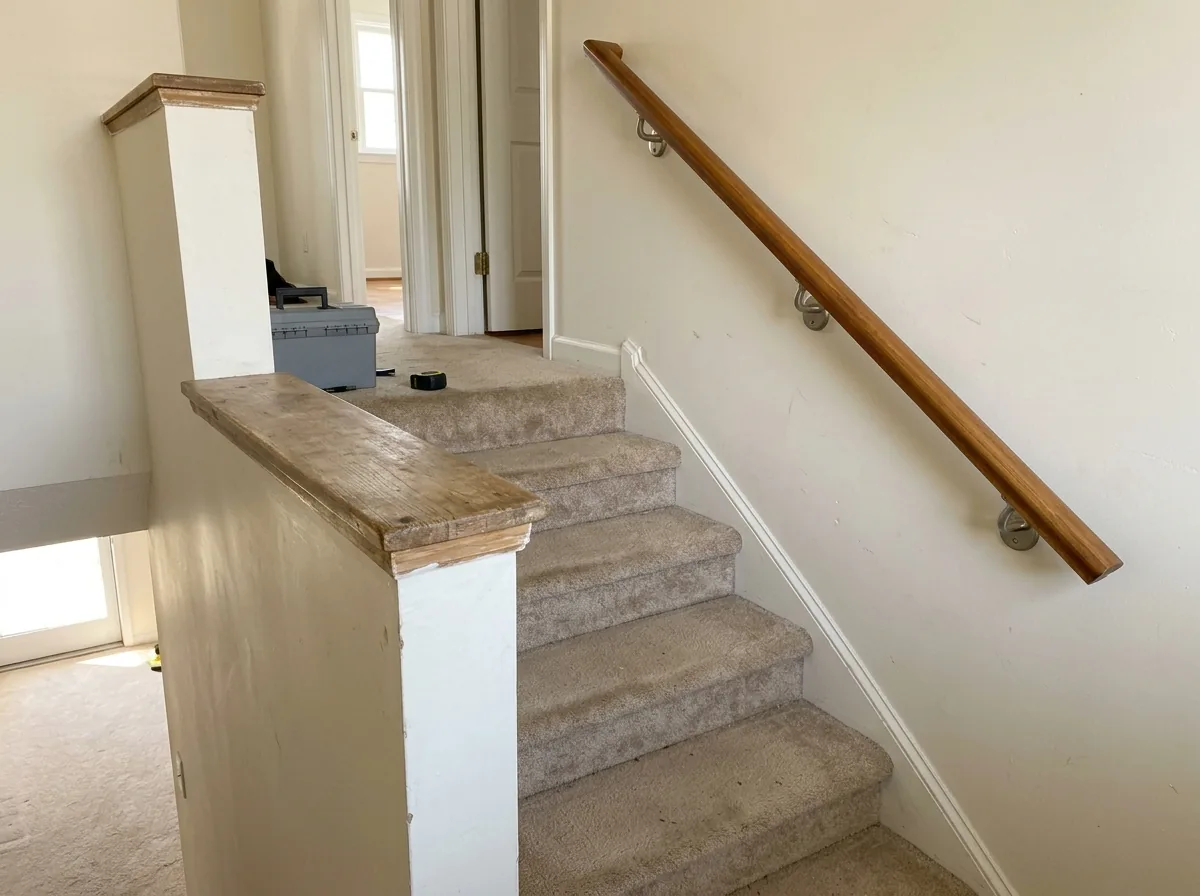
Missing or Ungraspable Handrails
A flat board on top of a guard can't be gripped, and some short flights have no rail at all. The fix is a graspable rail on brackets or posts, set at code height and run the full flight (see handrail rules). Commercial buildings carry a separate trigger: during a Level 2 alteration, exit stairs serving the work area get a rail if they have none.
- Those exit stairs: a handrail on at least one side once a stair has 3 or more risers
Why Tallahassee homeowners call Tallahassee Stair Railing
- Free for homeowners: the installer quotes you directly
- Your request goes to one railing installer, not a call list
- Ask for the rail height, baluster gap and material in writing
- Ask for a written quote before paying any deposit
When an Old Railing Has to Meet Today's Code
Roughly 35,000 homes in the city, 34.5% of the housing stock, went up before 1980, each railing built to the rules of its year. Florida's existing-building code lets materials installed legally under an earlier code stay in use, unless the building official decides they're unsafe. An inspector's note doesn't by itself require a change.
Three things change that. First, a repair can restore a damaged part with like materials, but it may not leave the railing less conforming than before. A dangerous condition has to be fixed whatever the size of the job. And where a guard is replaced, or added where none existed, the new one is built to the current Florida Building Code. In practice, the part you rebuild meets today's numbers, and the parts you leave alone don't have to.
Stair Railing Permits in Tallahassee and Leon County
The address decides the office. For addresses inside city limits, permits come from Growth Management's building inspection office, 435 N. Macomb Street (850-891-7001, option 2). Unincorporated addresses go to Leon County's Development Support and Environmental Management office.
City permit triggers
structural work, or any repair or alteration where labor and materials pass $7,500Raised decks, landings and balconies
a permit plus code guards once the surface sits over 30 inches above grade; commercial and multi-family decks always need oneLeon County decks
a permit above 100 square feet or 30 inches high, per the county's FAQ (re-check with the county, 850-606-1300)City fee
a $104.01 application fee, plus $243.04, plus $4.38 for each $1,000 of job value on 1- and 2-family work up to $50,000Review clock
the city must flag a missing item within 5 business days and decide a complete home application within 30 business days
National guides quote railing permits at $20 to $250, but those aren't local figures. If the contractor takes a deposit, the state's 10% deposit rule sets when the permit application has to go in.